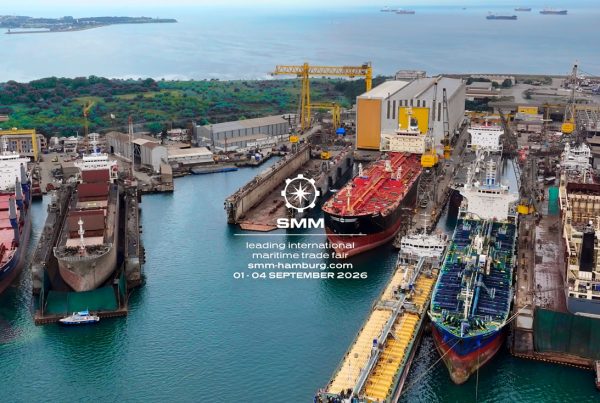


DESAN Shipyard, one of Türkiye’s well-established shipyards, has achieved a historic international milestone in line with its vision for sustainable production and green transformation. Desan has become the first Turkish shipyard to receive the Green Marine Europe certification, regarded as one of the most prestigious indicators of environmental excellence in the European maritime industry.
Based in France, Green Marine Europe is an international initiative that measures and certifies environmental performance in the maritime sector through independent audits. The program stands out with its criteria based on transparency, participation and continuous improvement in critical environmental areas related to air, water and soil quality.
DESAN Shipyard joined the program in 2024 and submitted its official certification application at the beginning of 2025. Following the assessment and scoring process, the shipyard qualified to receive this prestigious certification. With this achievement, DESAN became one of only four shipyards in Europe to hold Green Marine Europe certification, while also reinforcing its pioneering position as the first and only shipyard in Türkiye to receive the certificate.
Cenk İsmail Kaptanoğlu, Chairman of the Board of DESAN Kaptanoğlu Shipyard, made the following statement on the achievement:
“This certificate is an international recognition of our sustainability and environmentally friendly production approach. We are proud to represent the progress of Turkish shipbuilding at European standards. In the coming period, we will continue to set an example for the sector by constantly improving our environmental performance.”
DESAN had recently taken another important step as part of its sustainable production vision. Together with KPT Shipyard, which is also part of the Kaptanoğlu Group, the shipyard launched a $12.4 million solar power plant project. Developed in cooperation with CW Enerji, the plants have been commissioned and have started generating electricity. With an annual production capacity of nearly 25 million kilowatt-hours, the facilities will both meet the energy needs of the shipyards and support the reduction of carbon emissions.